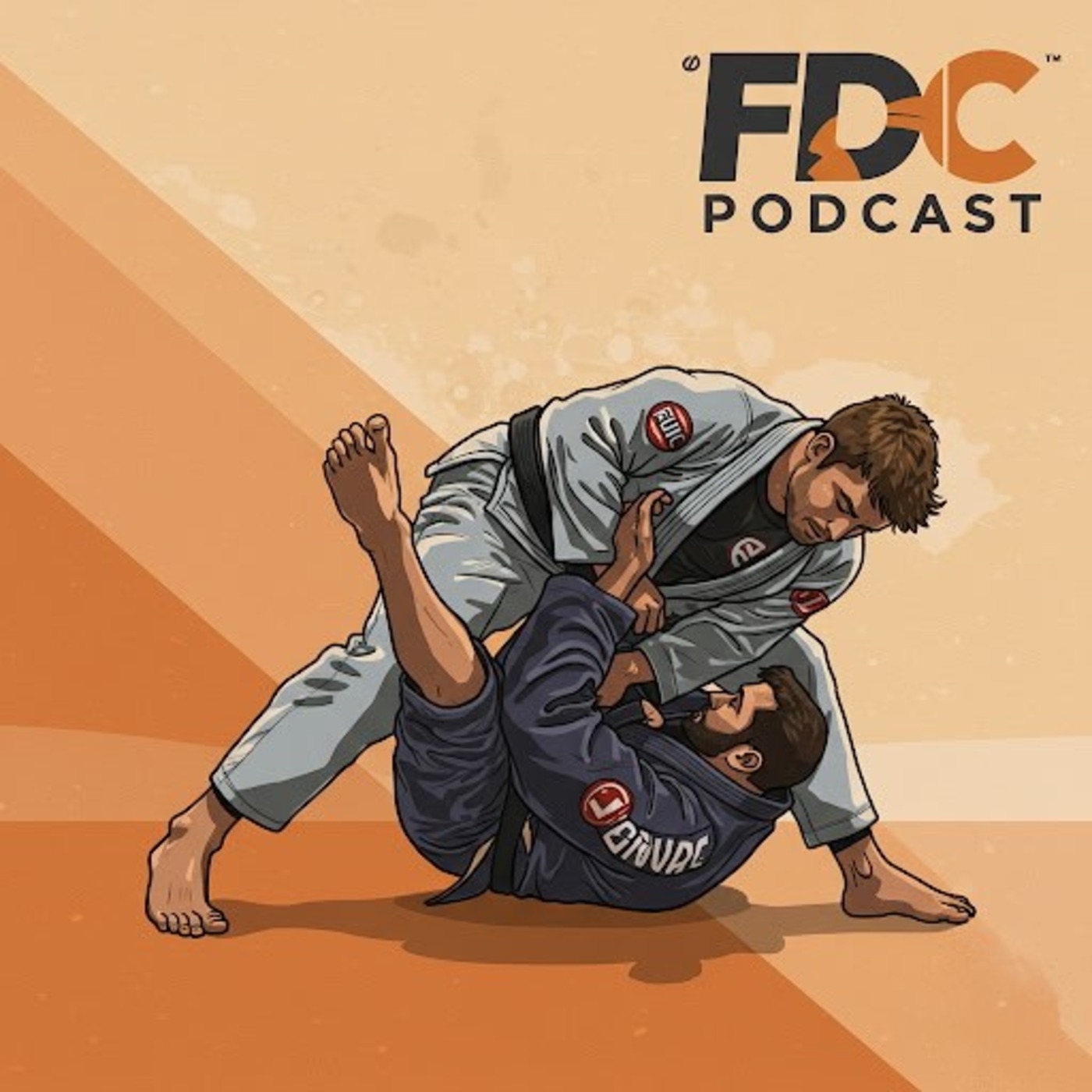
Breaking the BJJ Training Script: How to Evolve Against Familiar Training Partners
When you consistently train with the same partners, your sparring sessions can devolve into predictable, repetitive scripts where neither person makes significant progress. This post explores how to identify these stale training patterns and provides actionable strategies to mix up your variables, allowing you to use your most familiar rivals as a catalyst for leveling up your tactical game instead of hitting a performance ceiling.
Key Takeaways
- Understand how to identify the "training script" that prevents growth with familiar partners.
- Learn how to manipulate tactical variables like timing, range, and grip selection to force new responses.
- Discover the value of treating internal gym sparring as a high-stakes scrimmage to prepare for competition.
- Gain insights on how to use "battle buddies" to expose specific technical deficiencies in your game.
Breaking the Training Script
We have all been there. You have a training partner you’ve rolled with dozens of times. You know exactly what they’re going to do, and they know exactly what you’re going to do. You enter the room, engage in the same grip fight, you pull guard, they knee-cut to the right, you recover to half-guard, and the cycle repeats. While this is great for drilling muscle memory, it is the enemy of tactical evolution. When you can predict every move your partner makes, you are no longer practicing Jiu-Jitsu; you are performing a choreographed dance.
The issue with these scripts is that they provide a false sense of security. You might feel like your game is "working" because you successfully executed your favorite sweep, but you are only succeeding because your partner is playing into your trap. To get better, you have to force yourself out of these comfort zones.
Manipulating Your Variables
If you want to evolve, you need to introduce uncertainty into your training. You can do this by intentionally changing the variables of your engagement without abandoning your overall game plan. Consider these three approaches:
1. Modify Your Timing and Tempo
If you are accustomed to attacking from a specific position at a specific speed, change the tempo. If you usually rush a takedown, try slowing your entry down to focus on perfect, deliberate placement. Conversely, if you are a methodical player, try injecting a burst of speed in a transition where your partner least expects it. By changing the "rhythm" of the roll, you force your partner to react differently, which in turn forces you to find new answers to their new defenses.
2. Alter Your Range and Grips
Many of us have a "favorite" distance. Whether you love heavy pressure or long-range guard play, sticking to one range makes you predictable. Try playing from a range where you feel slightly less comfortable. If you always take the same collar grip, force yourself to use sleeve grips or underhooks for an entire round. By restricting your most common tools, you are forced to innovate and find new paths to victory that you might have previously ignored.
3. The "Invisible" Adjustment
Sometimes, the best way to break a script isn't a new move, but a subtle change in execution. Keep doing the same sequence, but change the direction of your weight distribution or the angle of your wedge. Small, micro-adjustments can turn a stalemate into a submission because your partner is bracing for the "old" version of your move, not the new, more efficient one.
Treating Training as a Scrimmage
In athletics, teams use scrimmages to test strategies against opponents who know their playbook. You should treat your most frequent training partners the same way. If you know that your partner is going to defend your knee-cut pass with a specific frame, don't just get frustrated; spend the round trying to beat that specific frame. Use the session to conduct a tactical audit of your game. Are you consistently failing to get past their guard? Instead of trying to "win" the roll, set a goal to improve your positioning against that specific defense. When you treat these sessions as a deliberate scrimmage, the pressure to "win" the roll disappears, replaced by the drive to solve a specific technical puzzle. This is where real growth happens. To hear more about these concepts and the importance of accountability, Listen to the full episode and join the conversation.
Frequently Asked Questions
How do I know if I am stuck in a training script?
If you find that your sparring sessions with a specific partner follow the exact same sequence of movements every time you roll, you are likely in a script. When the roll becomes predictable and lacks active problem-solving, you have stopped growing.
Is it better to change my move or change the way I execute it?
Changing your execution is often more effective for long-term growth. By keeping your core game but altering variables like speed, grip, or weight distribution, you force your partner to adapt, which makes your primary techniques much harder to counter in the long run.
Should I tell my partner I am changing my style?
Not necessarily. If you want a "live" test, keep your adjustments hidden. By surprising them with a different rhythm or a new grip, you test your ability to improvise under pressure, which is a vital skill for actual competition.